The Gypsies: Difference between revisions
m (1 revision imported) |
mNo edit summary |
||
| Line 1: | Line 1: | ||
In December 1884 and January 1885 Tchaikovsky corresponded with [[Vasily Kandaurov]] about a projected opera called '''''The Gypsies''''' (Цыгане) ([[ČW]] 459) <ref name="note1"/>, derived from [[Aleksandr Pushkin]]'s 1824 poem of the same name <ref name="note2"/>. | In December 1884 and January 1885, Tchaikovsky corresponded with [[Vasily Kandaurov]] about a projected opera called '''''The Gypsies''''' (Цыгане) ([[ČW]] 459) <ref name="note1"/>, derived from [[Aleksandr Pushkin]]'s 1824 poem of the same name <ref name="note2"/>. | ||
Writing to Tchaikovsky on 31 December 1884/12 January 1885, [[Kandaurov]] outlined the scenario | Writing to Tchaikovsky on 31 December 1884/12 January 1885, [[Kandaurov]] outlined the scenario: | ||
{{quote|''Act I''. Night. On a river bank. Gypsy camp<br/>''Act II''. Scene 1: Before sunset. A village square. Scene 2: Evening. A prison from outside; a young Gypsy is behind iron bars<br/>''Act III''. Scene 1: Noon. A valley among hills. Scene 2: Deep night. Steppe. A Gypsy camp in the distance; a burial mound in the background. Night, thunder, lightning <ref name="note3"/>.}} | {{quote|''Act I''. Night. On a river bank. Gypsy camp<br/>''Act II''. Scene 1: Before sunset. A village square. Scene 2: Evening. A prison from outside; a young Gypsy is behind iron bars<br/>''Act III''. Scene 1: Noon. A valley among hills. Scene 2: Deep night. Steppe. A Gypsy camp in the distance; a burial mound in the background. Night, thunder, lightning <ref name="note3"/>.}} | ||
Latest revision as of 20:50, 4 March 2023
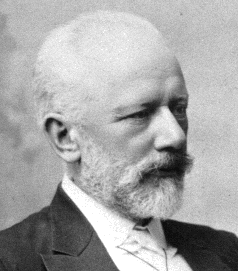
In December 1884 and January 1885, Tchaikovsky corresponded with Vasily Kandaurov about a projected opera called The Gypsies (Цыгане) (ČW 459) [1], derived from Aleksandr Pushkin's 1824 poem of the same name [2].
Writing to Tchaikovsky on 31 December 1884/12 January 1885, Kandaurov outlined the scenario:
Act I. Night. On a river bank. Gypsy camp
Act II. Scene 1: Before sunset. A village square. Scene 2: Evening. A prison from outside; a young Gypsy is behind iron bars
Act III. Scene 1: Noon. A valley among hills. Scene 2: Deep night. Steppe. A Gypsy camp in the distance; a burial mound in the background. Night, thunder, lightning [3].
Although Kandaurov had already begun work on the libretto, Tchaikovsky quickly decided not to pursue the project.